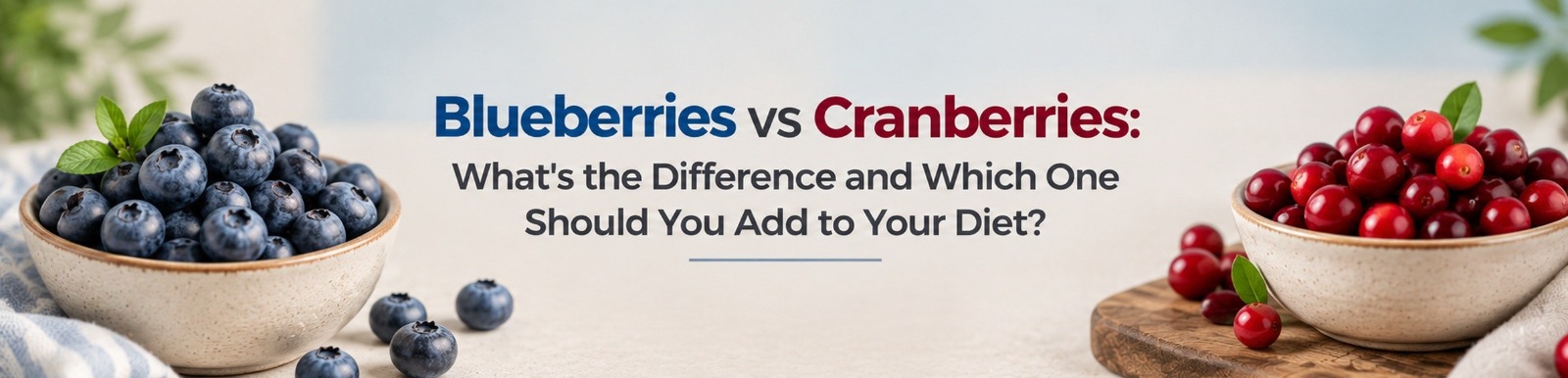
Blueberries and cranberries may look like similar small berries, but they differ considerably in taste, nutrition, and the ways they can fit into a healthy diet. Blueberries are naturally sweet, soft, and rich in anthocyanins, while cranberries have a sharper, more tart flavour and contain distinctive compounds called proanthocyanidins. Both provide fibre, vitamins, and beneficial plant compounds, so choosing between them does not have to mean declaring one universally healthier. In fact, adding both to a varied diet can be a practical way to enjoy different nutrients and flavours.
Blueberries vs Cranberries: Key Differences
The biggest difference between blueberries and cranberries is their flavour and nutritional profile. Blueberries are generally easier to eat on their own because of their naturally sweet taste. Cranberries are considerably more tart and are therefore commonly consumed fresh, dried, cooked, or as unsweetened products.
|
Feature |
Blueberries |
Cranberries |
|
Taste |
Sweet and mildly tangy |
Sharp and tart |
|
Colour |
Blue to deep purple |
Bright to deep red |
|
Key plant compounds |
Anthocyanins and other polyphenols |
Proanthocyanidins and other polyphenols |
|
Fibre |
Good source |
Good source |
|
Common uses |
Smoothies, oats, yoghurt, desserts |
Sauces, salads, baking and drinks |
|
Notable research interest |
Heart, cognitive and metabolic health |
Urinary tract health |
Both berries are nutrient-dense choices, and their nutritional values can vary depending on whether they are fresh, dried, sweetened, frozen, or processed.
Blueberry Nutrition and Benefits
Blueberries are particularly known for their anthocyanins, the pigments responsible for their characteristic blue-purple colour. They also provide fibre, vitamin C, vitamin K and other nutrients.
Research has associated berry consumption with several aspects of health, including cardiovascular and metabolic health. However, it is important not to treat blueberries as a medicine or expect one food to prevent disease. Their biggest advantage is that they are an easy, versatile whole fruit to include in a balanced diet.
You can enjoy blueberries:
- With yoghurt and oats
- In smoothies
- With whole-grain cereal
- In fruit salads
- As a convenient snack
If you prefer growing your own fruit, you can also buy blueberry bushes online and explore varieties suited to your growing conditions.
Cranberry Nutrition and Benefits
Cranberries are also rich in plant compounds, particularly A-type proanthocyanidins (PACs). They are especially well known for research into urinary tract health. Some evidence suggests cranberry products may reduce the risk of recurrent symptomatic UTIs in certain women, although results are not completely consistent. Importantly, cranberry products should not be considered a treatment for an existing UTI.
Fresh cranberries have a naturally sour taste, which is why many commercially available cranberry products contain added sugar. When choosing them, check the nutrition label, particularly for dried cranberries and sweetened juices.
Which Is Healthier: Blueberries or Cranberries?
There is no single winner. Your choice can depend on your dietary preferences and nutritional goals.
Choose blueberries if you:
- Want a naturally sweet berry
- Prefer a fruit that can be eaten directly
- Want a versatile smoothie or breakfast ingredient
- Enjoy foods rich in anthocyanins
Choose cranberries if you:
- Enjoy tart flavours
- Want to include a different variety of polyphenols
- Prefer berries in salads, sauces or recipes
- Are interested in cranberry's researched role in recurrent UTI prevention
For most people, variety is more useful than choosing just one. Different fruits provide different combinations of nutrients and plant compounds.
How to Add Both Berries to Your Diet
You do not need complicated recipes to enjoy them. Add fresh blueberries to breakfast or blend them into a smoothie. Cranberries can be mixed into salads, homemade trail mixes or cooked dishes.
If fresh berries are not readily available, frozen options can also be convenient. When buying dried cranberries, look for options with little or no added sugar.
For people searching for blueberry fresh online or planning a blueberry fruit buy online, choosing good-quality fruit and storing it correctly can make everyday consumption easier. A reliable blueberry shop online can also offer convenient options for people who want to explore blueberry varieties or plants.
Blueberries vs Cranberries: The Bottom Line
When comparing blueberries vs cranberries, both deserve a place in a balanced diet. Blueberries stand out for their naturally sweet flavour and anthocyanin content, while cranberries offer a distinctive combination of tartness and proanthocyanidins. Instead of focusing on which berry is “best”, consider eating a variety of colourful fruits throughout the week.
For those interested in growing blueberries at home, Bestowals can help you explore options for a convenient blueberry online purchase and choose suitable blueberry plants for your gardening needs.
FAQs
1. Are blueberries healthier than cranberries?
Not necessarily. Both offer fibre and beneficial plant compounds. Blueberries are particularly rich in anthocyanins, while cranberries contain distinctive proanthocyanidins.
2. Can I eat blueberries and cranberries together?
Yes. Combining different berries can add variety to your diet and provide a broader range of plant compounds and flavours.
3. Are cranberries good for urinary health?
Cranberry products may help reduce the risk of recurrent symptomatic UTIs in some women, but they are not a treatment for an existing UTI.
4. Are fresh blueberries better than dried blueberries?
Fresh blueberries generally provide the benefits of whole fruit without the concentrated added sugars often found in sweetened dried products. Check labels when buying dried fruit.
5. Where can I buy blueberry plants online?
You can explore buy blueberry bushes online options from a trusted nursery or gardening retailer such as Bestowals, depending on the variety and your local growing conditions.